

On May 18, 2026, His Excellency Stephen Doust, Ambassador Extraordinary and Plenipotentiary of Canada to Mongolia, gave a guest lecture on “Canada’s Indo-Pacific Strategy” to the students of the National University of Mongolia. The lecture offered students, taking the “Diplomatic and Consular Relations” course (INRE207) this semester, a first-hand perspective from a serving diplomat on Canada’s foreign policy and the growing global significance of the Indo-Pacific region.
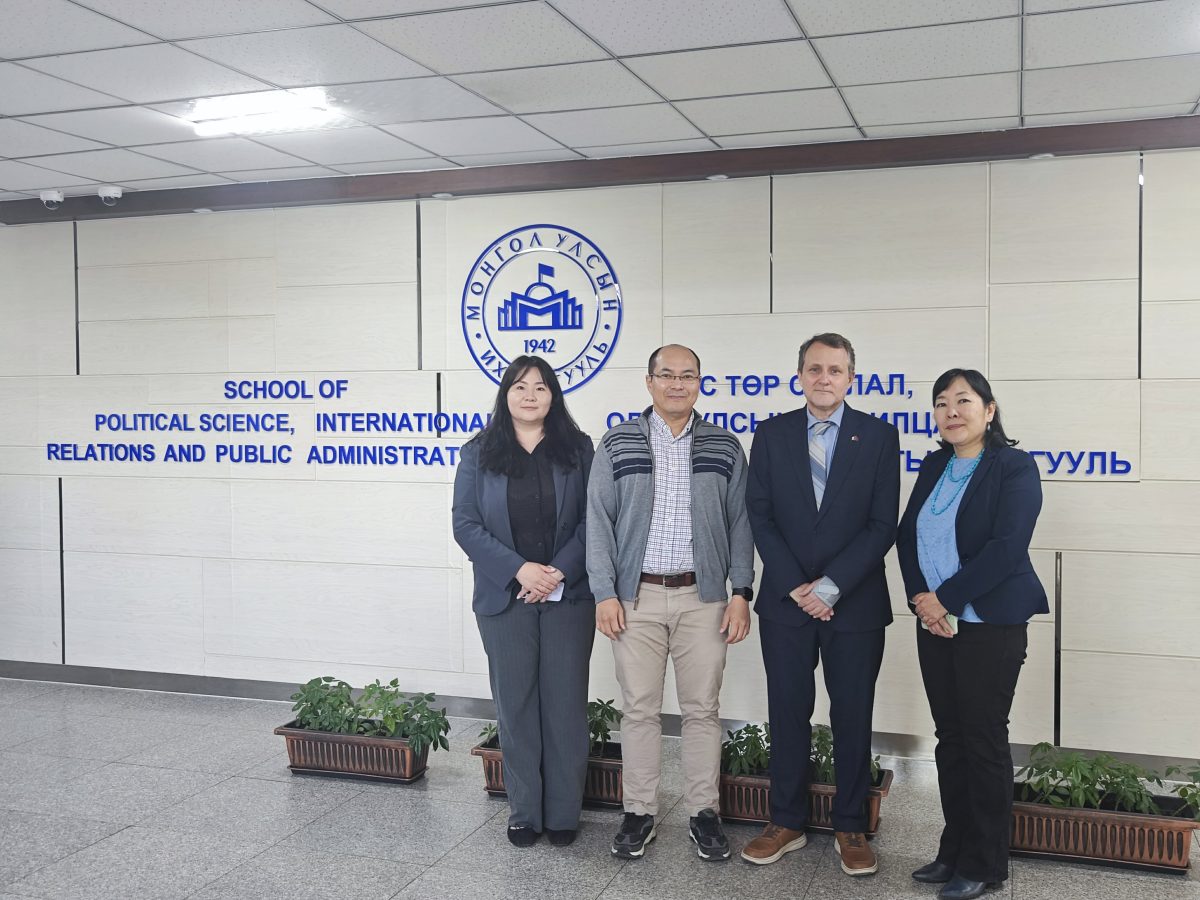
The event began with opening remarks by Ms. Oyunsuren Damdinsuren, Senior Lecturer at SPSIRPA, NUM, who welcomed Ambassador Doust and introduced his academic and professional background. Ambassador Doust holds degrees in East Asian Area Studies from the University of British Columbia and Law from the University of Toronto. Before joining Canada’s foreign service in 1999, he practiced law in Vancouver. During his diplomatic career, he has served in Tokyo, Washington, D.C., Port of Spain, and Guangzhou, as well as in several policy and legal positions at headquarters. Most recently, he served in Tokyo before being appointed Canada’s Ambassador to Mongolia in 2025.
In her remarks, Senior Lecturer Oyunsuren also noted that this was the fourth guest lecture by a Canadian Ambassador hosted in her class, following visits by Ambassador Gregory Goldhawk in 2014, Ambassador David Sproule in 2019, and Ambassador Catherine Ivkoff, who delivered a virtual lecture during the COVID-19 pandemic in 2021.
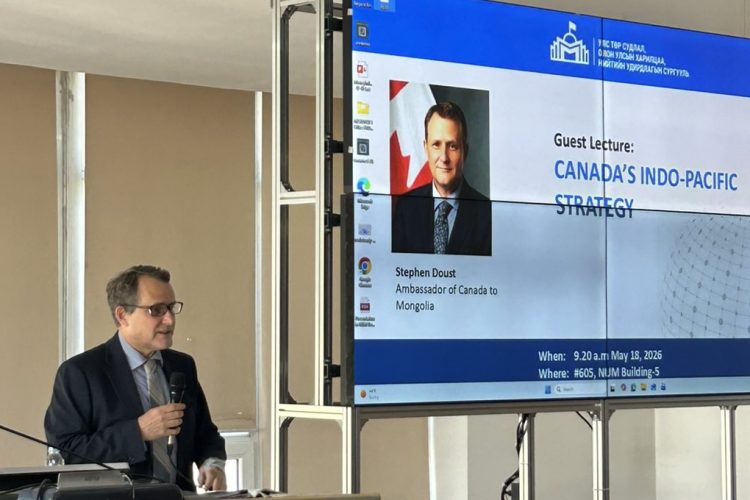
During the lecture, Ambassador Doust explained Canada’s Indo-Pacific Strategy and discussed why the Indo-Pacific has become one of the most important regions in global politics and economics. He highlighted Canada’s engagement with regional partners and emphasized the close connection between foreign policy, trade, security, and regional stability. The lecture helped students better understand how Canada approaches the Indo-Pacific and how countries cooperate within an increasingly interconnected regional environment. The topic was especially relevant for students of international relations because the Indo-Pacific has become a key arena shaping global political and economic developments. For Mongolia, which maintains active relations across the region while pursuing a balanced foreign policy, Canada’s approach offered useful perspectives on regional cooperation, diplomacy, and international security.
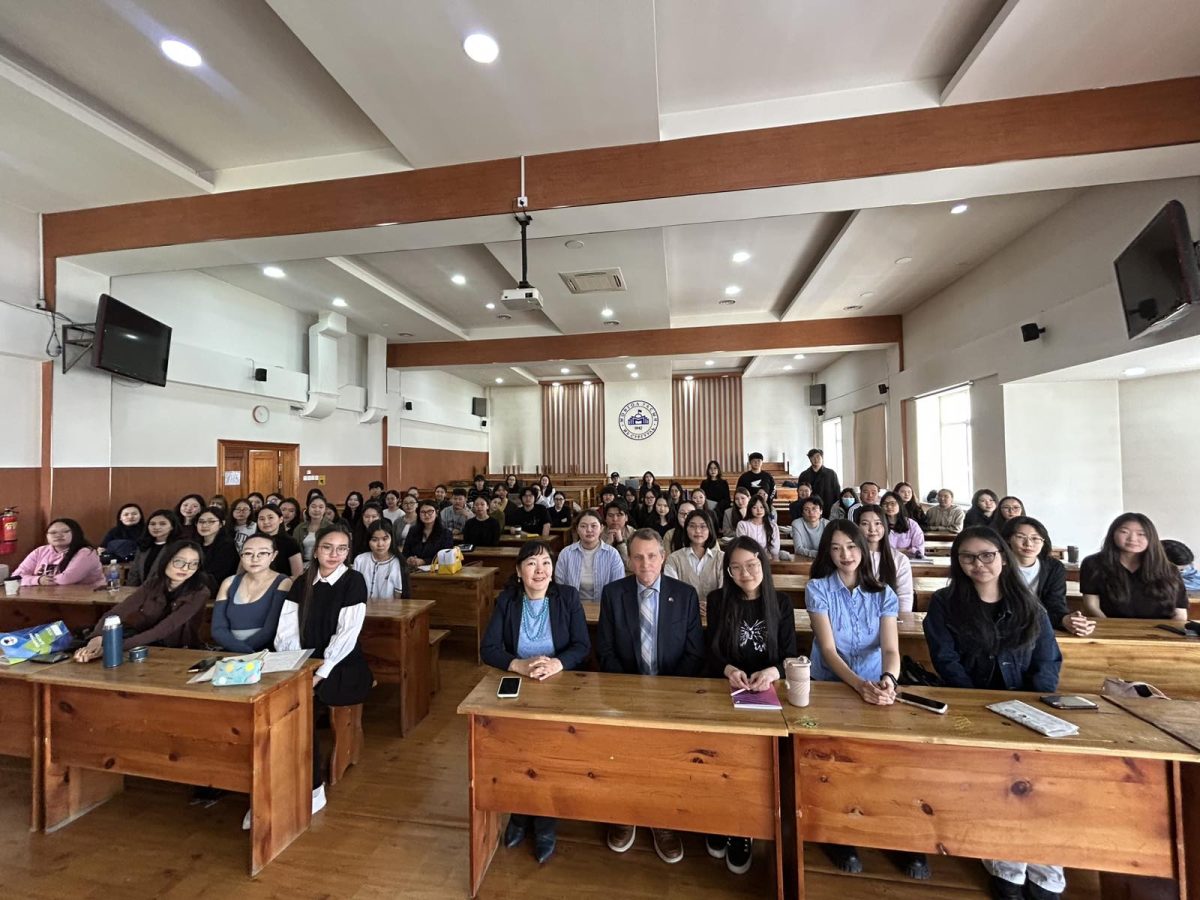
Ambassador Doust also introduced the Scholarships and Educational Exchanges for Development – Phase 2 (SEED-2) program, a scholarship initiative under Canada’s Indo-Pacific Strategy. He explained that the program provides opportunities for students from Mongolia and other Indo-Pacific countries to undertake short-term study or research at Canadian post-secondary institutions. The scholarship supports academic exchange, people-to-people connections, and research related to the United Nations Sustainable Development Goals. Students learned that the program covers expenses such as travel, living costs, health insurance, and study-related expenses, while Canadian institutions waive tuition fees for selected participants. Ambassador Doust encouraged students to explore future academic opportunities in Canada and highlighted the importance of educational exchange in strengthening Canada–Mongolia relations.
Ambassador Doust also discussed Canada’s broader foreign policy direction by referring to the remarks made by Prime Minister Mark Carney at the World Economic Forum Annual Meeting in Davos last January. Carney emphasized the end of the rules-based international order and outlined how Canada was adapting by building strategic autonomy while maintaining values like human rights and sovereignty. The Canadian PM called for middle powers, such as his own, to work together to counter the rise of hard power and the great power rivalry, in order to build a more cooperative, resilient world. Reflecting on the speech, Ambassador Doust stated, “I was very proud of my Prime Minister. There must be someone who can say what has to be said.” He further explained that Canada is seeking to diversify its economy, which remains heavily dependent on trade with its southern neighbor, with approximately 75 percent of exports linked to the United States. Ambassador Doust also remarked that rhetoric about Canada becoming the “51st state” was not viewed as a joke by Canadians, adding that many Canadians felt betrayed by what they had long considered their closest friend and partner.
Following the lecture, students asked questions about Canada’s Indo-Pacific priorities, regional cooperation, and Canada–Mongolia relations. Ambassador Doust answered the questions in detail, creating an open and engaging discussion. The exchange allowed students to deepen their understanding of the topic and connect the lecture with their own studies in international relations and diplomacy.
After the lecture, Ambassador Doust met with Dr. Munkh-Ulzii Batmunkh, Head of the Department of International Relations, and had a fruitful discussion about future cooperation. The two shared a brief, friendly exchange in Chinese—a language Ambassador Doust speaks fluently, and in which Dr. Munkh-Ulzii is proficient, having received his Ph.D. from a Taiwanese university.
Reflecting on his deep ties to the region, Ambassador Doust (who also speaks Japanese) noted that despite his extensive study of East Asia, his arrival in Mongolia revealed a culture and environment that is entirely sui generis—truly unique and in a class of its own.
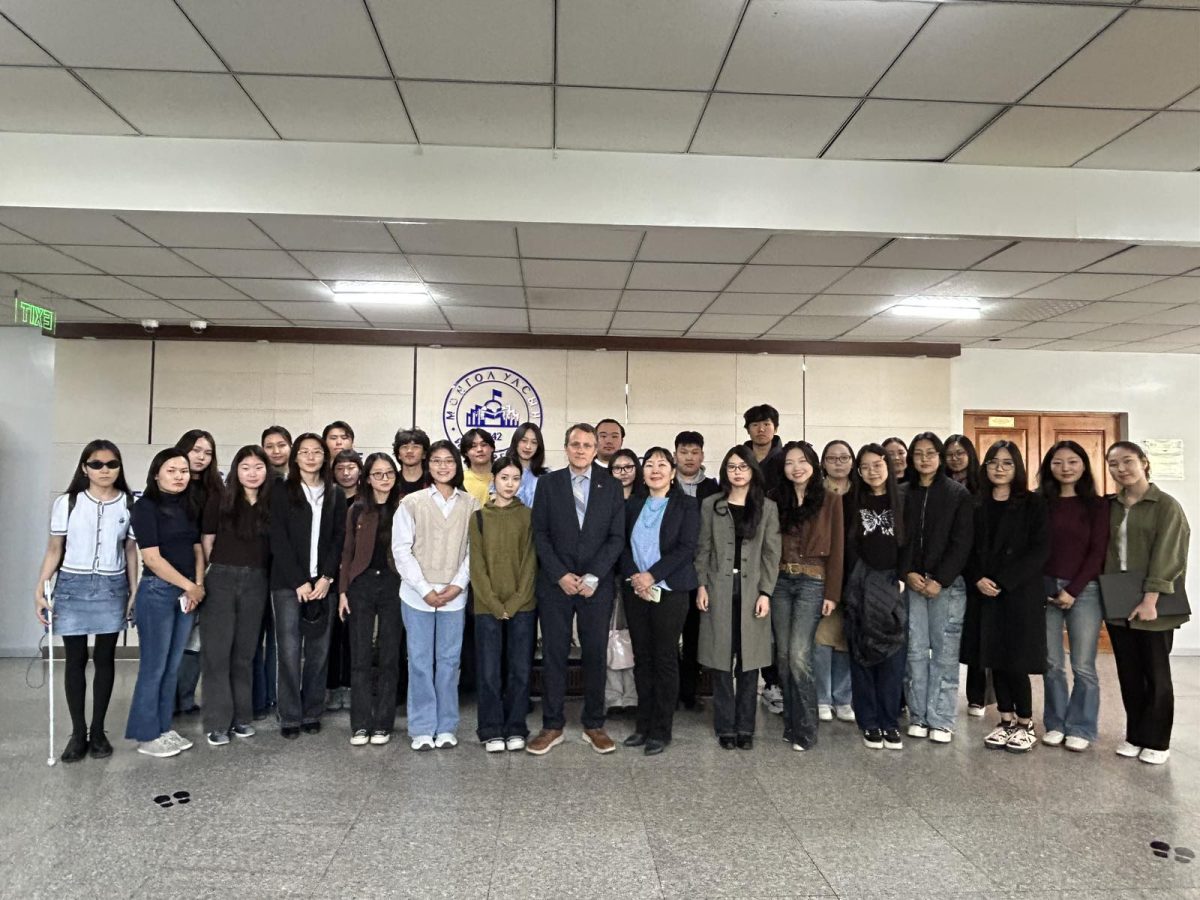
We would like to extend our sincere gratitude to the Embassy of Canada, with special appreciation to SPSIRPA 2013 alumni Anarmaa Baatar, for organizing and making this meaningful event possible.
By Zolzaya Sain-Udur and Nomin Battuvshin
