

In collaboration with Peace Boat and the Mongolian Peacebuilding Institute (MONPI), the International Conflict Resolution (INRE404) class taught by SPSIRPA senior lecturer Oyunsuren Damdinsuren had the honor of hosting Tomiko Fukushima, a survivor of the Nagasaki atomic bombing (hibakusha) and advocate for a nuclear-free world. During the session, Ms. Fukushima shared her experiences as well as the stories of others affected by the bombing and reflected on the lasting human impact of nuclear weapons on the people of Japan and future generations.
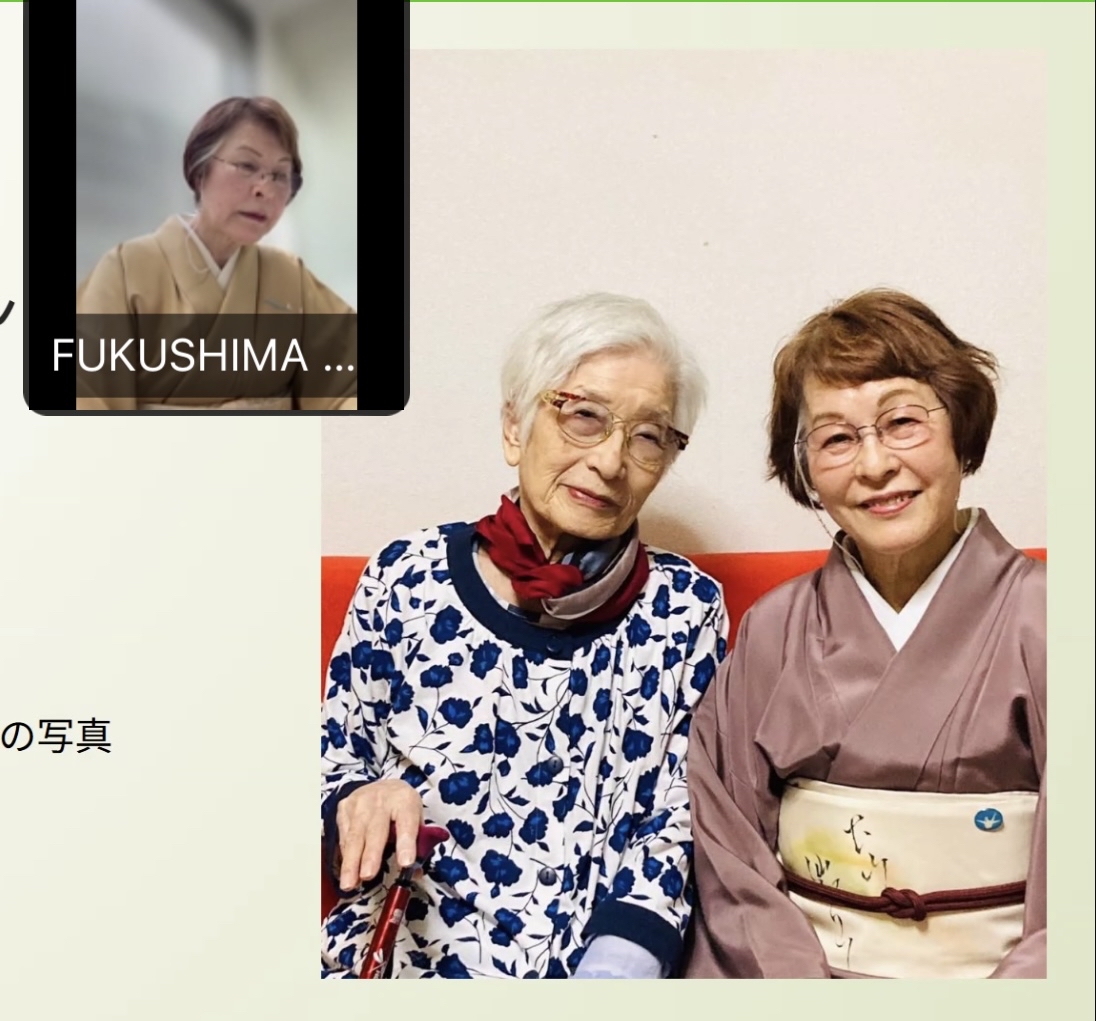
In her opening remarks, MONPI co-founder Ms. Oyunsuren Damdinsuren stated, “From the war in Ukraine to the rising tensions in the Middle East, we are constantly reminded that nuclear weapons are not just a part of history; they are a clear and present danger today, underscoring the long-enduring relevance of the stories of hibakusha. She also reflected on the personal significance of the event, sharing, “On a personal note, this collaboration is very close to my heart. I still fondly remember my time on the Peace Boat voyage in 2010.” Peace Boat, is a Japan-based international NGO that has long carried hibakusha testimonies around the world through its Nuclear Free World project.
The dialogue continued with the introduction of Peace Boat representative, Rita Watanabe who served as an interpreter for Ms. Fukushima as she recounted her childhood, her experience of the atomic bombing and the life she built afterward. Ms. Fukushima was only six months old when the atomic bomb was dropped on Nagasaki. She was exposed to the blast at a distance of approximately 2.5 kilometers from the hypocenter. Only a small hill between her home and the blast site separated them, which helped protect her from the direct force of the explosion. Despite surviving the initial blast, the aftermath was a period of immense hardship. Separated from her family at age four, she was raised by relatives and only discovered her identity as a hibakusha much later.
Ms. Fukushima continued her testimony to share her journey of becoming an advocate. For years, she felt she had “no right to speak” because she had no memory of the atomic bombing. However, she began her activism at age 70, realizing that “even without memory, I can speak for the nameless survivors,” after meeting an older first-generation hibakusha woman several years ago who entrusted her with the task of sharing her story.
In the second part of her testimony, Ms. Fukushima shared with us a truly heartbreaking story of a 94-year-old Nagasaki Hibakusha, who was a high school student when the bomb exploded.
During the dialogue, Ms. Fukushima’s kimono stood out as a memorable part of her story. For her, the kimono is far more than traditional attire; it is a source of strength that connects her to her culture, her home, and her heritage that the bombing sought to erase. Since joining Peace Boat’s Hibakusha project, Ms. Fukushima continues to speak publicly, and even attended the first Meeting of States Parties to the Treaty on the Prohibition of Nuclear Weapons.
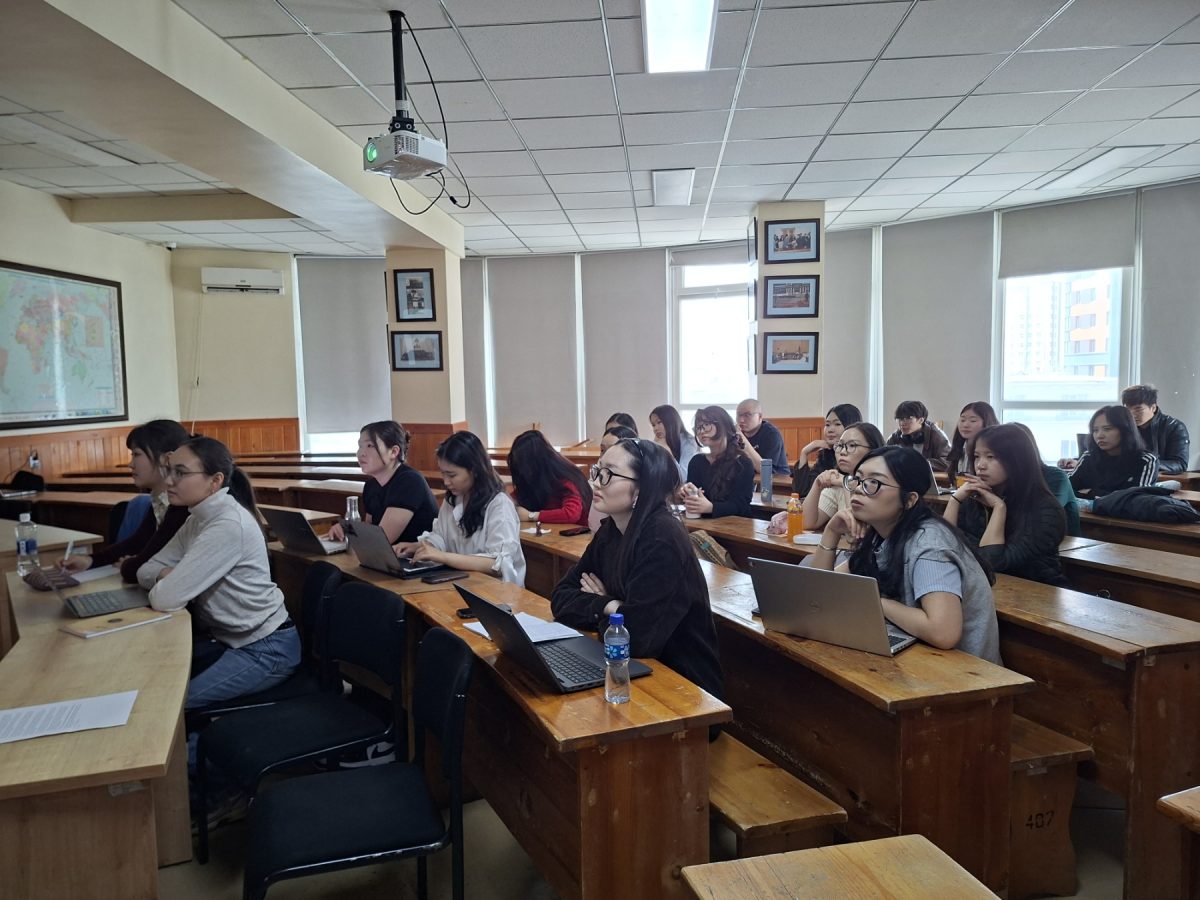
During the Q&A session, a student asked Ms. Fukushima what she wished people understood most about nuclear weapons and how people today could better understand the scale of the nuclear threat facing the world. Reflecting on her experiences, she shared that it had been an extremely dangerous and difficult time, and expressed her hope that people would truly understand the devastating impact of nuclear weapons. She encouraged students to continue learning about nuclear disarmament, including researching how many nuclear weapons still exist in the world today and the risks they continue to pose to humanity. She also emphasized that there is still much more to learn about the issue through continued education, dialogue, and historical reflection.
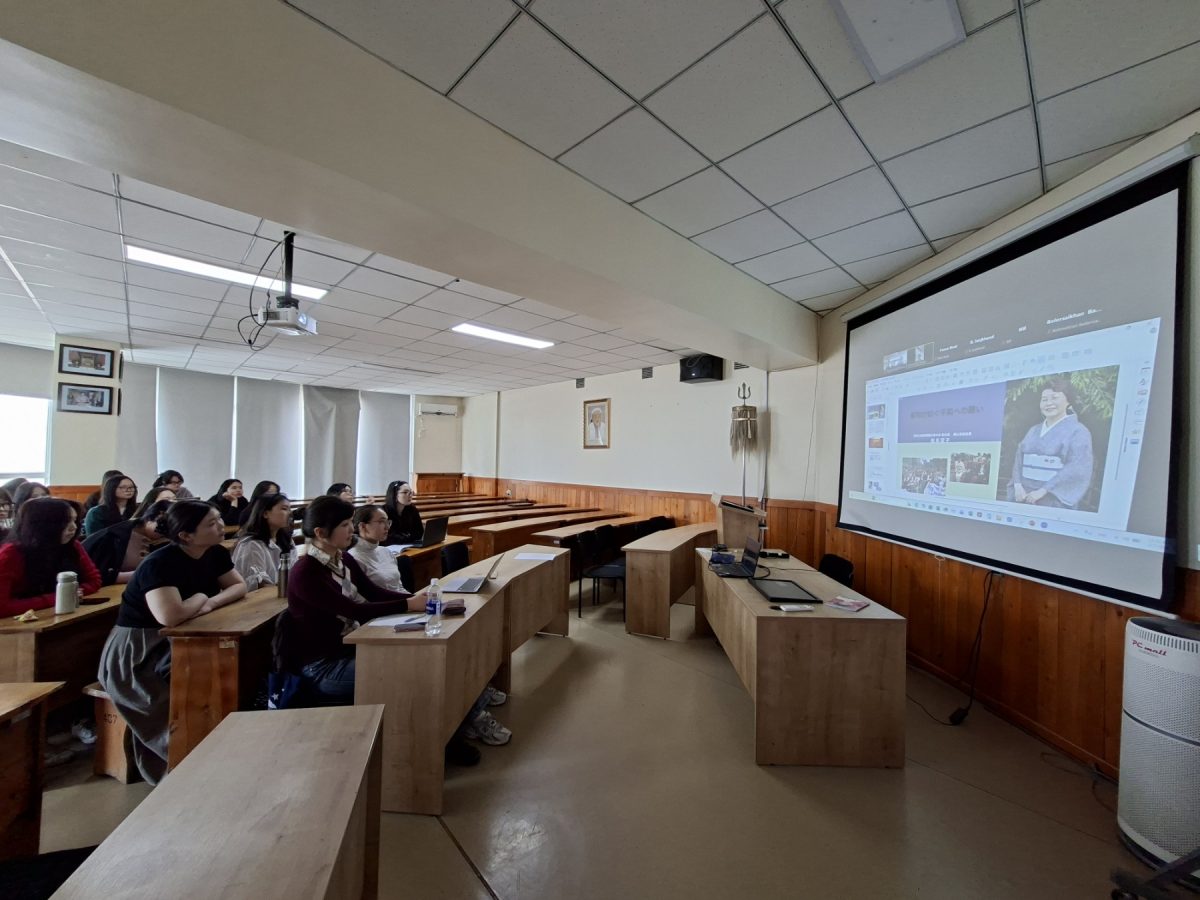
Ms. Fukushima’s story is a reminder of the suffering caused by nuclear weapons that lasted far beyond a single moment and echoed through generations. It serves as a reminder that survivor testimony is not only about remembering the past, but also about protecting the future. Peace must be built through remembrance, education, and action, but never through nuclear weapons.
Here are some reflections from the students, who attended the event:
Bilguun Jargalsaikhan: “I am inspired by how Ms. Fukushima uses her personal history and even her traditional attire, like her peace-themed kimono, to advocate for a nuclear-free world”
Tsengeg Nyamsuren: “First of all, thank you very much for vividly sharing stories of those events, as if we could see them with our own eyes. Also I’d like to say that your kimono suits you beautifully, and it is truly wonderful that your traditional clothing not only serves as attire but also gives you strength and support in your peace-building activities. I would also like to express my gratitude to the interpreter.”
Saruul Nanzadbaatar: “This lecture left a deep impression on me because it showed the human side of nuclear warfare through the story of a survivor. I was especially moved by how she continues to share her testimony and promote peace through her embroidered peace-themed kimono. I was deeply inspired by this woman, who showed that humanity must never forget its history.”
Ankhmaa Buuveibaatar: “The event highlighted the human cost of nuclear weapons and reinforced the importance of peace.”
Janyerkye Avlaikhan: “I learned about the devastating impact of the Nagasaki atomic bombing from Fukushima Tomiko’s experience. She spoke about her childhood during and after the Nagasaki atomic bombing, describing the fear, loss, and suffering she experienced at a young age. Her story showed the importance of peace, humanity, and the need to prevent nuclear war.”
Yesugen Ulziisaikhan: “What made this lecture so special to me was how Tomiko Fukushima transformed painful historical memories into a message of peace and hope for younger generations. I was especially fascinated by how she used traditional Japanese clothing not only as cultural art, but also as a way to communicate history and emotion. Her lecture felt both educational and deeply human at the same time.”
Tergel Naranbaatar: “What I learned from this event is how deeply the atomic bombing affected innocent people’s lives. Tomiko Fukishima survived the Nagasaki bombing as a baby and spent many years separated from her family. Even though she does not remember the bombing clearly, she continues to share her experience and that of another hibakusha to teach other people about peace and the danger of nuclear weapons publicly about such a painful history.”
Serjkhand Bayartsetseg: “Thank you so much for sharing your story with us. It was deeply moving to hear how, despite the devastating impact of the war and being separated from your home and family at such a young age, you had found the strength and the will to keep living through wearing the kimono 💛 It sends an important message to the world, that we must never forget what happened, and that even after such tragedy, life can continue. And I deeply appreciate your continuous dedication to speaking out. Especially at a time where so many parts of the world remain vulnerable, I believe it is utmost important than ever to listen to the voices of those who have lived through such suffering so we are reminded of what truly matters. Hearing about what Ms. Murakami went through makes me feel so sad and devastated. I can’t even imagine what it was like in person. And this only goes to show that peace is never achieved through nuclear weapons. I hope you can continue to spread awareness. Thank you again, Fukushima Tomiko & Peace Boat!”
By Serjkhand Bayartsetseg and Maral Battur
